Showing posts with label class. Show all posts

Friday, November 18, 2016

Foster Care Meeting 5 & 6

Class five and six were definitely easier classes, but they were also very important.

In class five, we learned about the biological parents. After talking so much about figuring out what was going on in children's minds, we were turning our attention to the "abusers" and "neglectors."

However, after talking about asking "why are they doing this," in relation to the children, it was pretty easy for me to transfer that same thought process toward the parents.

First, the instructor showed us a picture of a very messy home. He asked us to try and look at it in a positive way. Instead of finding things to scorn and find concerning, he asked us to look for positive areas in the home. Our job was to figure out what the parent was doing right, so we could work from there. We were also supposed to try and think of the best possible reasons that the house might be in that condition.

He explained that he had been to some extremely disgusting homes when he first became involved in the foster care program, and he had motioned to the mess around him and asked the parents, "What are we going to do about this?"

The parents would look at him with very obvious confusion and say, "About what? You should have seen my mother's house. Mine looks great compared to hers."

A lot of time, they simply don't know that there is a better way. If we are going to work with them, we need to find the good things that they are accomplishing so we can support, love, and care for them.

Some of the notes I took during this meeting, consisted of the following:

  • We need to think "why are they doing this? or why are they acting this way?" instead of "How dare they do this!" toward the parents.
  • If there is a cause for behaviors in children, why isn't there a cause for adults?
  • Never say anything bad about bioparents, especially in front of their children. If the kid wants to talk negatively about their parents, listen and validate their feelings, but don't encourage. 
  • We need to help parents get in a state where they think, "I can do that." Overwhelmed parents are not thinking parents. Don't be fearful, invite and aid. 
  • Try and see things from bioparent's perspective. They are living in the moment. They can't see the big picture, or waste time thinking about the future.
It was really interesting to think about things from a different perspective. We had entered this program to help children in need. I had never even thought about helping their families. However, as we watched some videos of parents who had previously had children in foster care, I realized how important it is that we don't give up on the children's parents too. 

A lot of these parents are no more than children in adults bodies still living in survival mode and struggling with their own abuse and trauma. They need the help as much as their children do. Instead of turning our backs on them and dismissing them as "failures," we need to be their support and encourage the progress they are making.

The instructor talked about how, especially with parents who are on drugs, that the trauma of having their children removed can send them spiraling even deeper into their addiction. By the time they finish the grief cycle, time is almost up (they have a year to prove to the judge that they are making substantial progress.) Often these parents will look at all the things that they are supposed to do and the amount of time they have left, and they will just give up. 

Reunification is the BEST option, if it is safe and possible. We need to treat these parents like human beings and have more empathy for what they are going through. I hope that we'll be able to help a lot of parents and children become reunited and functional.

In class 6, we talked about Managing Emotions & Behaviors and the Effects of Caregiving. In other words, this was the discipline class.

Grig and I had both been looking forward to this class, because we were hoping that it would help us with disciplining our three year old. It was somewhat gratifying to realize that we were already doing a lot of the things that he explained to us. 

For example, a while ago, we were trying to figure out how to help Kevin's reactions. He would start screaming when he didn't like something, and would become physical. We were at a loss, when suddenly it hit me that we could try role-playing. So, when something happened, and he reacted in a way that we didn't like, we would stop and practice the situation in a positive manner a couple more times. 

So it would go like this: 

Random friend: Kevin's Mom, Kevin is blocking the slide!
Kevin: *gives a grumpy and stubborn face*
Me: Kevin, would you like it if your friends wouldn't let you go down the slide?
Kevin: *grunts and doesn't respond*
Me: Would that make you happy?
Kevin: No.
Me: Okay, let's practice. You pretend to block me, and I'm going to ask you to stop. 
Kevin: *stands in front of me with arms stretched out*
Me: Please move, Kevin.
Kevin: Okay. *He moves out of the way*
Me: My turn. Now I'm going to block you.
Kevin: Please move out of my way.
Me: Very good! Let's try again!

It's been working really well for us, and has helped to teach him how he should react in those situations. He's been a lot easier to work with. You can't just tell a child how to stop a behavior, they have to have something to replace that behavior.

There are also some that we definitely need to work on, but overall, I don't think we are doing too badly as parents. 

Here are some of my notes from the discipline class:
  • Effective discipline is more concerned about stopping future behaviors, instead of current behaviors
  • Offer reasons and show child why they will benefit the child
  • Engage in positive discussions
  • The most effective parenting is teaching and showing 
  • You can't tell someone they can't do something, you have to give them another option
  • 3 things to ask before you deal with a child: 1-How am I feeling? 2- How is the child feeling? 3- If I continue with this path, how will this impact our relationship long-term.
  • Every interaction you have with a child teaches something. 
  • Always ask WHY. If we're questioning, we're staying in the logical part of our brain and not dropping into the emotional basement of our brain. The emotional part of our brain is the part that can be out-of-control.
  • Whenever you say, "Don't" you've only alerted their brains to what comes next. Most of the time, they won't hear the "don't." They'll only hear the second part, and they'll do it.
  • Notice good behaviors. Recognize them and praise the child. Acknowledge the progress they're making and help the child be aware of their own progress.
  • Negative attention is better than NO attention. A child will take what they can get.
  • Timing matters (how far along they are developmentally, understanding their age and what they can comprehend, how we and they are feeling in the moment.
  • Every behavior is purposeful. There's always a reason behind it. 
  • Have appropriate consequences, both good and bad. They need to make sense to your child. Control yourself. Our logic brain and our emotional brain are like the opposite ends of a teeter-totter. The higher one side, the less control the other side has. If we allow our emotions to be raised to high in our minds, we are only going to negatively impact our relationship. Wait until you're at least even. 
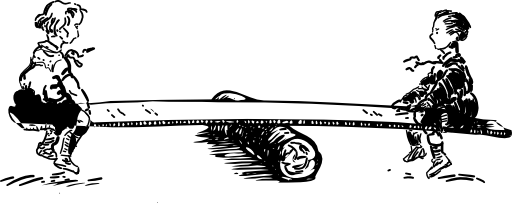
Image result for teeter totter public domain
  • Help them rewire their own brains. Positive reinforcement with immediate feedback. (The instructor explained it like a game of hot and cold. You're always giving feedback on how close they are getting to the target. Telling them they are colder isn't negative, it's useful. If a child comes in the room and you just stare at them, they won't know how to find the object.)
  • Explain what they are doing well, don't just tell them, "Good job."
  • When modeling a behavior, talk out loud and explain what you are doing and why you are doing it. 
It was a really good class, and I think it has already helped our parenting.

It's kind of funny. I've been training dogs for a long time, and a lot of what they are saying about parenting is pretty similar to dog training. For example, I learned that you should never discipline or train when you are angry. Anger will turn everything you do into a negative experience. If you're feeling your emotions rise, stop training. Resume when you are under control again.

Of course there are differences, but all the things the teacher was teaching us made sense to me.

He also mentioned one other important thing that I wanted to write down.

If you have a two-year-old, and you tell them no, they are going to throw a fit. There is no magic way to fix their behavior.

What did you expect? They're two.

😃😊😄


Friday, November 4, 2016

Foster Care Meeting 2

Last night was an interesting night. We dropped Kevin off at my cousins' apartment on our way to the meeting. We left early, but rush-hour traffic still caused us to be late. We couldn't have left any earlier either. Grig gets home between 4:45-5:00. We left the home at 5:55. It was supposed to take 27 minutes, and it took 38 minutes. That was pretty annoying, but things got better when we got to the meeting.

While enjoying dinner, we began to learn about child development.

First we talked about age appropriate landmarks and then we took a quiz to see how well we knew our child development. I got about half of the questions right, but as I looked over my answers, I realized that I had gotten all the ones right that fell into my son's age group and under. Anything older than my son was much more shaky. I suppose that made sense.

One of the things I learned last night was that Kevin is entirely age appropriate at the moment. The instructor talked about how between the ages of three and four, children merge reality and imagination. He described a kid who he saw at the store who was dressed as Spiderman and who believed with all his heart that he WAS Spiderman. As he was telling this experience, I couldn't help but think of Kevin.

Nearly everyday right now, I'll ask Kevin to do something, and he'll say, "My name is not Kevin. My name is Superman." Just yesterday, he told me, "I have two names: Superman and Clark."

I asked, "Don't you have three names? Isn't Kevin your name too?"

He shook his head and said, "No. Superman and Clark Kent."

Depending on the day, and what he is wearing, his persona changes, but he is very rarely Kevin right now. Sometimes he is "Blue Man" or "Waterman," but usually he is Superman.

The instructor went on to say that this is healthy for this age and we shouldn't discourage it. They'll grow out of it, but right now they're developing key parts of their brain by pretending and it will make their minds healthier. It won't hurt them, and it doesn't hurt us. He encouraged us to let them pretend.

Next we talked about developmental delays. He told us that when people experience traumatic events, it puts their minds in a kind of freeze. The mind goes into survival mode, and stops developing mentally. Once the danger is passed, then their mind begins to develop, but it starts at whatever point it froze. He told us that most children in foster care have a developmental delay.

We were instructed that we needed to figure out where the child was mentally so that we could understand and be less frustrated with their behavior. If you know a child is 9, but mentally is six, it is much easier to understand their behaviors. It is also easier to have patience, and know how to help them. However, he cautioned us not to simply accept the current mental age. The idea behind foster care is to identify where they are at, and then to help them to grow. Once they enter a safe environment (our home) they can begin to age again, and we should help them to do so as well as we can.

The next section of the class talked about a reverse bicycle. He showed a video of a man who was dared to ride a reverse bicycle. If you turned the handle bar one way, the wheel went in the opposite direction. The man was confident that he could ride, but no matter how hard he tried, the bike would tip over. He discovered that the brain is wired a certain way, and you can't just tell it to change. So, for months he practiced ten minutes a day on the reverse bicycle. After about 9 months (I think that was how long, it might have been a little longer), something suddenly clicked and he could do it. He did the same experiment with his son who had only been riding a bike for three years, and it only took his son two months.

There were some important lessons to be learned from this example. One of the things was that you can't just tell someone to do something. You have to teach them how. It isn't easy to rewire a brain. Children's minds are more malleable, and they are able to learn new behaviors more quickly, but we need to have patience with them and their birthparents.

The goal of foster care is reunification. We are supposed to be trying to not only help the children, but their parents too. Only when that isn't possible are foster children adopted. As we were talking about that, I realized something.

The goal of foster care is to save families.

That was like a hammer blow in my mind. We are here to help not only the children, but their parents. If we have some children come and join our family, it will only be because after our very best efforts, things just didn't work out with their parents. We plan on giving it our best effort too. Studies have shown that when children can be with their birthparents and the situation can be improved, it is ALWAYS better for the child.

It is only when the child's safety is at risk and the birthparent can't or won't change their own behaviors that the children are removed permanantly. If the birthparent is showing that they're trying, they will extend the time that the children are simply removed until the parent's behaviors have changed enough. They won't take away the parent's right unless they are showing no improvements.

We learned some other interesting things last night about different developmental levels, and at the end we talked about teenagers.

We watched a final video from a man who studies the ways that minds work, and he told us that there are several reasons that teenagers act the way that they do. He told us that they have decreased dopamine levels and increased reactive levels. Essentially that means that the part that cautions them against dangerous things is reduced, while those chemicals that enjoy risk and excitement are increased. He explained that this was because teenagers were "preparing to leave the nest" and needed to have less caution in order to do so. They needed to be willing to change, take new risks, and challenge old perceptions.

He told us that we needed to be less critical of teens, and more compassionate and empathetic. We needed to allow them to think in new ways and to use their innovation. We also need to help impart some of the caution that they may be lacking.

I've really been enjoying these classes. He gave us some homework, and let us leave half an hour early.

We drove back to my cousin's apartment complex and parked the car. As we did so, I briefly thought, "I wonder if we need a permit?" However, we were only going up to get Kevin, so I decided not to worry about it.

We walked upstairs, talked to my cousins for a few minutes, retrieved Kevin (who was very happy and very much awake), and returned to our car, only to find it booted and a note on the window.

That wasn't a very pleasant end to the evening. After we had called the number, a young man showed up. I explained our situation. I told him that we hadn't been aware that you needed a permit to park here, we had just been here long enough to fetch our son, and if we had known, we wouldn't have parked in the parking lot. He was sympathetic, but their rules were firm. Evidentally, if you parked there after 9 without a permit, you were booted. There was no visitor parking. It was 9:30, so we were just out of luck.

Thirty minutes later and seventy-five dollars poorer, our car was freed and we were on our way home. Both of us were a bit upset by that. Honestly, my mind kept saying, "That isn't fair. We didn't know the rules, and no one warned us. We've been doing good things. Why did this have to happen tonight." It didn't help that we didn't get home until 10 p.m. and we had to wake up at 4:00 a.m.

Bad things often happen after good experiences, but it's important not to let the bad things sour the good experience. I feel much less frustrated this morning. I think it's going to be a good day today, and I'm really enjoying our foster classes.

One of my favorite things about them is that Grig and I are doing them together. It is really fun to sit with my husband for four hours and to be able to talk and learn together about something that is interesting to both of us.

We're excited for next weeks' classes!

Saturday, September 14, 2013

Are There Any Original Endings Left?


When I was going to college, I took a fiction writing class.  It was a lot of fun and I really enjoy writing, so it was kind of a treat.  At the time, I was considering changing my major to become an English major and so I was experimenting to see how I liked those kind of classes.

We would all write short stories and then we would take turns as a class reading each person's story and analyzing it.  You weren't allowed to talk when your story was being analyzed, but you could listen and see people's reaction to your story.  

I learned a lot in that class.  However, one thing sticks out in my memory.

At the class's beginning, everyone's stories were completely different.  Some weren't very well-written, true, but they were creative and original.  However, as the class progressed, I began to see something very interesting happen.  Trying to get a reaction out of their audience, characters in the stories began to die. It was a slow thing at first.  A character death here, someone's reaction to it there, but it spread through the class like a plague.

After two-thirds of the semester was over, everyone's stories were ending in death.  It was an incredible change.  Soon, it was a surprise if someone's story didn't end with someone dying.  Reading back on some of those short stories that I wrote during that time, I was a little surprised by how dark they were.  I don't think I would even think about writing some of them now.  

Finally, at one point, I wrote a story just to stir things up.  Out of all the stories I wrote that year, this one wasn't my favorite, but my teacher LOVED it.

Here's the story:

******
 The Truth About Age

    The old woman hobbles slowly down the path, a bag in one hand, a cane in the other.  Her legs are bowed and she is bent nearly double with pain as she makes her way to a small gate.  Her wrinkled face is creased with sadness and she stumbles now and again against rocks on the uneven path.  

    As she reaches the gate, she slowly lifts her weary head only to find a young man there.  He smiles gently and opens the gate for her.

    “Would you like me to take your bag?” he asks kindly.

    The old woman, surprised, is silent for a moment and then speaks in a voice worn with age, “I would be most grateful, young man.”

    He quickly takes her bag and extends an arm.  The age-old sadness begins to slip from her face as she gratefully takes the proffered hand.  Slowly, sorrowful wrinkles begin to transform into gentle laugh lines.  

    They walk in silence for several minutes.  Once they reach her destination, the young man graciously hold open the door.

    He nods his head to her slightly as she takes her bag back and he gently smiles a final time.

    “Have a good day,” he says, and disappears down the street.

    The woman, no longer bent with age, continues to smile as she walks into the store.  Energy seems to fill her small frame and she glides more quickly, only using her cane slightly.  Time slowly fades, and wrinkles are made smooth. 

******

It was a very positive and uplifting story.  I was trying to convey the message that as we help those around us, they can feel younger.  It was very different from the suicide and other depressing stories that we all were turning out at that point.  It was interesting to me to see the positive reaction to my story.  As humans, sometimes we're so busy trying to get an emotional reaction and trying to be stunning that we don't realize that we're stopped being stunning and have become the same.

When The Ring came out, most horror movies had happy endings, or at least resolutions.  However, since then, most scary movies seem to just be getting darker and creepier without resolution.  At the time, it was original, now my siblings don't even think its all that scary.

When Tolkien wrote Lord of the Rings, fantasy wasn't even a genre.  There was simply fiction and nonfiction. When The Hobbit came out, these stories were still being called Fairy Tales.  Now it seems that you can find elements of Tolkien's books in nearly every fantasy.

I enjoy it when books surprise me.  However, as I work at writing my own stories I wonder if they're too predictable.  Do my stories have events in it that are just intended for 'shock-value'?  Or do they have surprises that are surprising because we really couldn't see them coming?  The best authors even include clues, but the readers mind either misses those clues or assumes that they are leading to something else.

In our own lives, do we follow the crowd?  Are we inclined to do things for the shock value?  Or are we going to do uplifting and positive things that will surprise others because they are different from the way society is doing things.  Like the young man in my story, are we helping others to throw off their troubles or are we causing them more pain?

Are there any original endings left?  Yes.  However, it is up to each of us to find our own.  I can't live my life the same as any other person, and I shouldn't try.  I'm someone different.  I want to do what's right, and that means I have to find my own path.  Each of us has a completely different story from everyone else.  We have different backgrounds, different motivations, and different goals.  As we discover that story, we can choose whether we are a good or bad influence in the lives of those around us.  We can choose how we affect their stories.

And at the end, everyone will have their own original ending.  However, what happens and whose with us when the time comes is really up to each of us.